The Black Tiger
Great Expectations
The Rider of the Mohave
Twenty Thousand Leagues Under the Seas
The Invisible Man
The Mysterious Island
Family Conflict, Ambition, and Emotional Struggle inThe Mill on the Floss
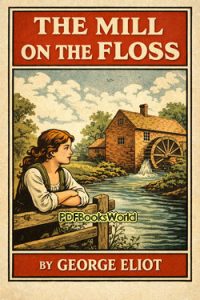
The Mill on the FlossbyGeorge Eliotis a deeply emotional novel about family relationships, personal ambition, social expectations, and the difficult journey from childhood to adulthood. First published in 1860, the novel is widely admired for its psychological depth and realistic portrayal of human emotion.
Set in rural England, the story follows the lives of Maggie and Tom Tulliver as they grow up facing family pressure, financial hardship, and emotional conflict.
The Story of Maggie and Tom Tulliver
The novel centers on the Tulliver family, who live near the River Floss and operate Dorlcote Mill.
As children, Maggie and her brother Tom share a strong emotional bond, but their personalities are very different.
Maggie is imaginative, emotional, intelligent, and independent, while Tom is practical, disciplined, and strongly concerned with duty and reputation.
As they grow older, financial troubles and personal disappointments begin to place increasing strain on both the family and their relationship.
Main Characters
Maggie Tulliver– An intelligent and emotional young woman struggling against social expectations and personal desires.Tom Tulliver– Maggie’s determined brother, whose strong sense of pride and responsibility shapes many of his decisions.Mr. Tulliver– The children’s stubborn father, whose financial problems deeply affect the family.Philip Wakem– A sensitive and thoughtful young man who develops deep feelings for Maggie.Stephen Guest– A charming and attractive man whose relationship with Maggie creates emotional conflict.
Major Themes in the Novel
Family Loyalty and ConflictThe novel explores the emotional strength and tension within family relationships, especially between Maggie and Tom.Social ExpectationsMaggie struggles against the strict social rules placed upon women during the 19th century.Love and SacrificeCharacters are often forced to choose between personal happiness and moral or social responsibility.Pride and ForgivenessEmotional pride and resentment shape many relationships throughout the story.
George Eliot’s Realistic Writing Style
George Eliot, the pen name of Mary Ann Evans, became famous for her intelligent and psychologically realistic fiction.
Her writing style includes:
Detailed emotional analysisRealistic character developmentStrong moral reflectionCareful social observationRich descriptions of rural life
Eliot focuses heavily on the inner thoughts and motivations of her characters, giving the novel emotional depth and realism.
Why Maggie Tulliver Remains Memorable
Maggie is often considered one of the most complex female characters in Victorian literature. Her intelligence, emotional intensity, and desire for freedom make her both sympathetic and tragic.
Many readers continue to connect with Maggie’s struggles involving:
Personal identity, emotional conflict, social judgment, family expectations, and the search for understanding and acceptance.
The Novel’s Connection to George Eliot’s Life
Many critics believe parts of the novel were inspired by George Eliot’s own childhood experiences and family relationships.
This personal connection may explain the emotional realism and detailed portrayal of provincial life throughout the story.
Why the Novel Still Matters Today
Although written in the 19th century,The Mill on the Flosscontinues to feel emotionally relevant because of its exploration of relationships, ambition, and personal struggle.
Readers still appreciate the novel for its:
Psychological realismComplex charactersEmotional depthSocial commentaryTragic and powerful storytelling
Who Should Read This Book?
The Mill on the Flossis especially suited for readers interested in:
Classic Victorian literature, family dramas, psychological fiction, emotionally complex characters, and realistic social novels.
Readers who enjoy thoughtful and character-driven storytelling may find the novel especially rewarding.
Final Thoughts
The Mill on the FlossbyGeorge Eliotis a moving and psychologically rich novel about family, love, ambition, and emotional sacrifice. Through Maggie Tulliver’s deeply personal struggles, Eliot explores the challenges of individuality and social expectation with remarkable honesty and compassion.
Combining emotional realism with powerful storytelling, the novel remains one of the great achievements of Victorian literature.
Outside Dorlcote Mill
A wide plain, where the broadening Floss hurries on between its green banks to the sea, and the loving tide, rushing to meet it, checks its passage with an impetuous embrace. On this mighty tide the black ships—laden with the fresh-scented fir-planks, with rounded sacks of oil-bearing seed, or with the dark glitter of coal—are borne along to the town of St Ogg’s, which shows its aged, fluted red roofs and the broad gables of its wharves between the low wooded hill and the river-brink, tingeing the water with a soft purple hue under the transient glance of this February sun. Far away on each hand stretch the rich pastures, and the patches of dark earth made ready for the seed of broad-leaved green crops, or touched already with the tint of the tender-bladed autumn-sown corn. There is a remnant still of last year’s golden clusters of beehive-ricks rising at intervals beyond the hedgerows; and everywhere the hedgerows are studded with trees; the distant ships seem to be lifting their masts and stretching their red-brown sails close among the branches of the spreading ash. Just by the red-roofed town the tributary Ripple flows with a lively current into the Floss. How lovely the little river is, with its dark changing wavelets! It seems to me like a living companion while I wander along the bank, and listen to its low, placid voice, as to the voice of one who is deaf and loving. I remember those large dipping willows. I remember the stone bridge.
And this is Dorlcote Mill. I must stand a minute or two here on the bridge and look at it, though the clouds are threatening, and it is far on in the afternoon. Even in this leafless time of departing February it is pleasant to look at,—perhaps the chill, damp season adds a charm to the trimly kept, comfortable dwelling-house, as old as the elms and chestnuts that shelter it from the northern blast. The stream is brimful now, and lies high in this little withy plantation, and half drowns the grassy fringe of the croft in front of the house. As I look at the full stream, the vivid grass, the delicate bright-green powder softening the outline of the great trunks and branches that gleam from under the bare purple boughs, I am in love with moistness, and envy the white ducks that are dipping their heads far into the water here among the withes, unmindful of the awkward appearance they make in the drier world above.
The rush of the water and the booming of the mill bring a dreamy deafness, which seems to heighten the peacefulness of the scene. They are like a great curtain of sound, shutting one out from the world beyond. And now there is the thunder of the huge covered wagon coming home with sacks of grain. That honest wagoner is thinking of his dinner, getting sadly dry in the oven at this late hour; but he will not touch it till he has fed his horses,—the strong, submissive, meek-eyed beasts, who, I fancy, are looking mild reproach at him from between their blinkers, that he should crack his whip at them in that awful manner as if they needed that hint! See how they stretch their shoulders up the slope toward the bridge, with all the more energy because they are so near home. Look at their grand shaggy feet that seem to grasp the firm earth, at the patient strength of their necks, bowed under the heavy collar, at the mighty muscles of their struggling haunches! I should like well to hear them neigh over their hardly-earned feed of corn, and see them, with their moist necks freed from the harness, dipping their eager nostrils into the muddy pond. Now they are on the bridge, and down they go again at a swifter pace, and the arch of the covered wagon disappears at the turning behind the trees.
Now I can turn my eyes toward the mill again, and watch the unresting wheel sending out its diamond jets of water. That little girl is watching it too; she has been standing on just the same spot at the edge of the water ever since I paused on the bridge. And that queer white cur with the brown ear seems to be leaping and barking in ineffectual remonstrance with the wheel; perhaps he is jealous because his playfellow in the beaver bonnet is so rapt in its movement. It is time the little playfellow went in, I think; and there is a very bright fire to tempt her: the red light shines out under the deepening gray of the sky. It is time, too, for me to leave off resting my arms on the cold stone of this bridge....
Ah, my arms are really benumbed. I have been pressing my elbows on the arms of my chair, and dreaming that I was standing on the bridge in front of Dorlcote Mill, as it looked one February afternoon many years ago. Before I dozed off, I was going to tell you what Mr and Mrs Tulliver were talking about, as they sat by the bright fire in the left-hand parlour, on that very afternoon I have been dreaming of.
A Family Party Maggie left her good aunt Gritty at the end of the week, and went to Garum Firs to pay her visit to aunt Pullet according to agreement. In the mean time very unexpected things had happe…
Borne Along by the Tide In less than a week Maggie was at St Ogg’s again,—outwardly in much the same position as when her visit there had just begun. It was easy for her to fill her mornings apart fro…
Waking When Maggie was gone to sleep, Stephen, weary too with his unaccustomed amount of rowing, and with the intense inward life of the last twelve hours, but too restless to sleep, walked and lounge…
The Return to the Mill Between four and five o’clock on the afternoon of the fifth day from that on which Stephen and Maggie had left St Ogg’s, Tom Tulliver was standing on the gravel walk outside the…
St Ogg’s Passes Judgment It was soon known throughout St Ogg’s that Miss Tulliver was come back; she had not, then, eloped in order to be married to Mr Stephen Guest,—at all events, Mr Stephen Guest h…
Showing That Old Acquaintances Are Capable of Surprising Us When Maggie was at home again, her mother brought her news of an unexpected line of conduct in aunt Glegg. As long as Maggie had not been he…
Maggie and Lucy By the end of the week Dr Kenn had made up his mind that there was only one way in which he could secure to Maggie a suitable living at St Ogg’s. Even with his twenty years’ experience…
The Last Conflict In the second week of September, Maggie was again sitting in her lonely room, battling with the old shadowy enemies that were forever slain and rising again. It was past midnight, an…

WhyThe House of MirthRemains a Powerful Classic of American Literature The Hous…
Read more

A Timeless Journey of Ambition, Love, and Personal Growth in Victorian England
Read more

A Journey Through Prehistoric Humanity A Son of the AgesbyStanley Waterloois a …
Read more